Cables & Rigging
2 productsStainless steel boat lift cable sold by the foot in several diameters, plus cable winders. Measure your old cable's diameter and length before you order.

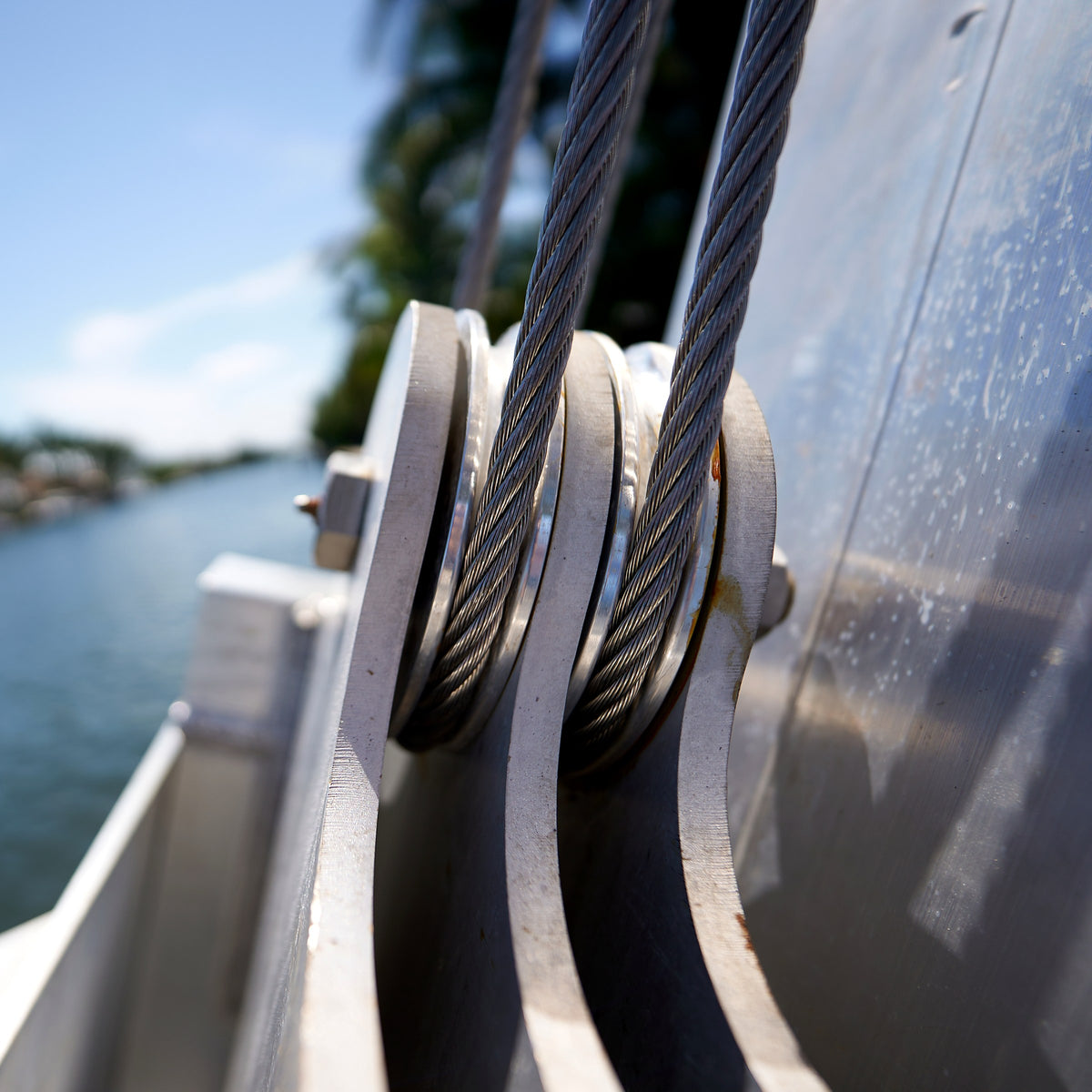

Replacing boat lift cable
Cable is the part most likely to fail without much warning, and it is the one holding your boat in the air. Replace it at the first broken strand, kink, flat spot or rust stain, and replace both sides of a lift at the same time so they wear evenly.
To order stainless steel boat lift cable, measure two things on the old cable: the diameter (use calipers on a clean section, not a frayed end) and the total length from the winder to the termination, plus the wraps that stay on the winder. Then choose how the end is finished. Do not size up or down from what your lift was built for, because the cable has to seat in the sheave grooves and on the winder.
In salt water, stainless cable lasts far longer than galvanized, which rusts from the inside out where you cannot see it. Rinse the cable with fresh water when you rinse the boat, and check where it runs over each sheave, since a seized sheave wears a flat spot into new cable quickly. If your winders are corroded, replace them with the cable: anodized winders are listed with the lift types they are made for.
Before a storm, see the hurricane preparation guide for what to do with the cables and the boat.
Questions about cables & rigging
What size cable does my boat lift use?
Measure the diameter of your existing cable with calipers on an undamaged section, and use the same size your lift was built for.
How do I know how much cable to buy?
Measure from the winder to the cable end with the lift fully lowered, and add the wraps that stay on the winder. When in doubt, order a little extra rather than short.
Stainless or galvanized cable for salt water?
Stainless. Galvanized cable corrodes inside the strands near salt water, often before you can see it on the surface.
Should I replace both cables at once?
Yes. Replacing them in pairs keeps the lift level and means both sides wear at the same rate.